
FEBRUARY 2019
the unexpected utopia
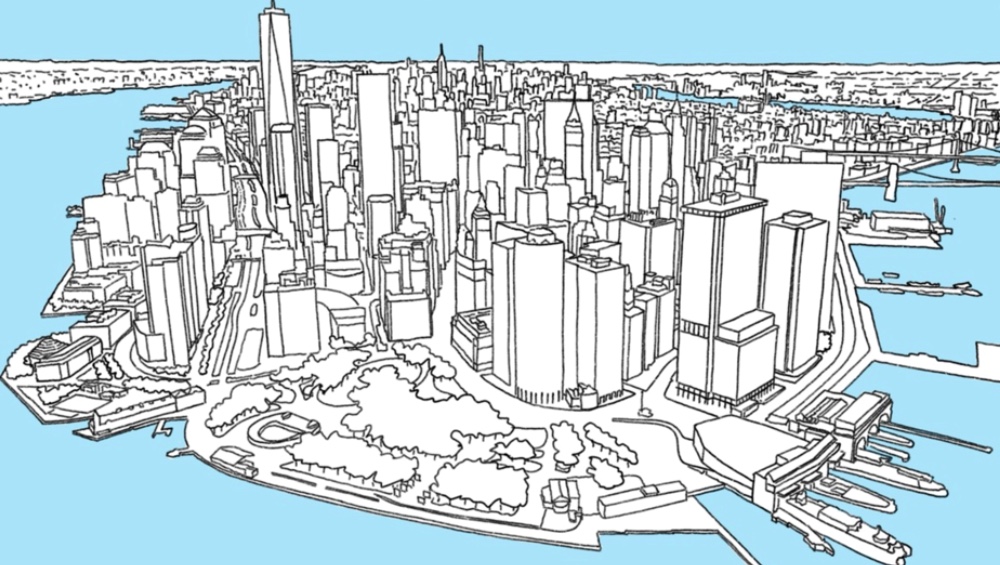
For an intriguing start to a book, this is right up there…
"My wife and I got married right out of college, in 1978. We were young and naïve and unashamedly idealistic, and we decided to make our first home in a utopian environmentalist community in New York State. For seven years, we lived, quite contentedly, in circumstances that would strike most Americans as austere in the extreme: our living space measured just seven hundred square feet, and we didn’t have a dishwasher, a garbage disposal, a lawn, or a car. We did our grocery shopping on foot, and when we needed to travel longer distances we used public transportation. Because space at home was scarce, we seldom acquired new possessions of significant size. Our electric bills worked out to about a dollar a day."
The book is "Green Metropolis" and the author is David Owen. The "utopian environmentalist community" he is referring to is Manhattan.
Owen then goes on to describe how Manhattan is the greenest community in the United States. How can this be right? We are so used to cities being cited as environmental disasters, and Manhattan is the iconic exemplar of cities.
If we look at some primary data, we can see support for his statement.
Berkely University created the CoolClimate network, which provides tools to calculate the greenhouse gas emissions of all transportation, energy, foods, goods and services purchased by households and businesses. One of those tools is the interactive carbon footprint map. Hover your computer mouse over the map and you can see the carbon footprint per household for all the zip codes of the United States. The map is colour coded: green for least carbon footprint, red for high footprint.
Zoom into Manhattan, and we can see that the carbon footprint is green. That represents a relatively low footprint. But travel 30 kilometres east to Old Westbury in nearby Nassau Country, representative of the peri-urban fringe, and we can see that low-rise town has a carbon footprint per household of nearly three times that of Manhattan.
A look at satellite images of Old Westbury shows arcadian fields, well separated large single houses, extensive driveways- significantly more “green” than the comparatively dystopian hues of Manhattan. But environmentally Manhattan is far greener than Old Westbury.
Perhaps there is an aphorism here, similar to a well known saying about democracy. It might be something like "In advanced economy countries cities are the most environmentally unsustainable form of living, apart from all the rest."